PAIPolyamide-imide
Duratron PAI offers outstanding heat resistance, with a continuous service temperature of 260℃ even under extreme mechanical conditions. Parts machined from Duratron PAI outperform those made from most other advanced engineering plastics (AEP) in compressive strength and impact resistance. It is an amorphous material with a glass transition temperature of 280℃, a very low coefficient of linear thermal expansion and high creep resistance, giving excellent dimensional stability across its entire service range.
- Continuous service temp.
- 260℃
- Glass transition temp.
- 280℃
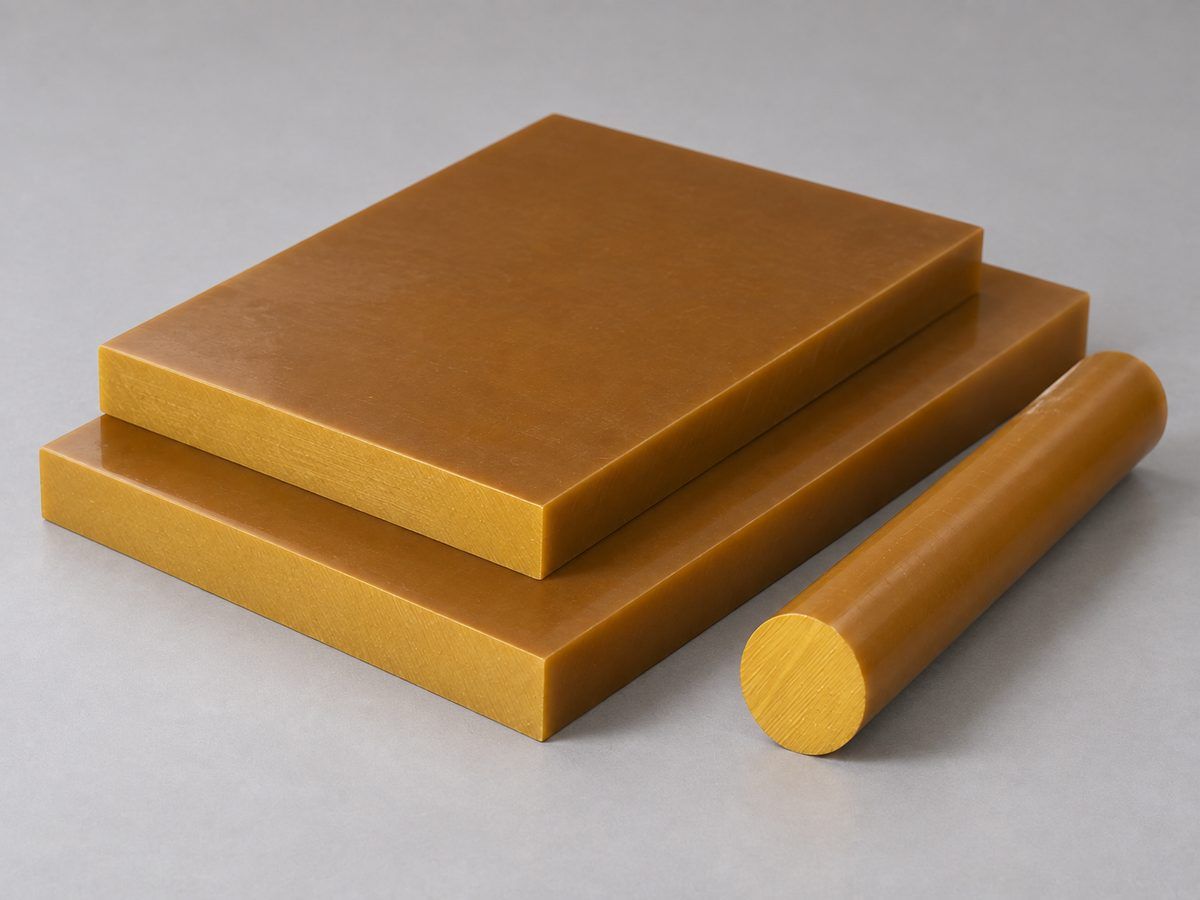
Features
Strength and rigidity up to 260℃
Excellent mechanical strength and rigidity up to 260℃.
Low thermal expansion at 260℃
A very low coefficient of linear thermal expansion, even at 260℃.
Wear resistance in bearing grades
Bearing grades offer outstanding wear resistance.
Thermal, chemical and mechanical performance
Excellent thermal, chemical and mechanical properties.
Resistance to high-energy radiation
Highly resistant to high-energy radiation such as gamma rays and X-rays.
Properties
| Property | Unit | Test method | Value |
|---|---|---|---|
| Continuous service temperature | ℃ | — | 260 |
| Glass transition temperature | ℃ | — | 280 |
| Density | g/cm³ | — | Pending |
| Tensile strength | MPa | — | Pending |
| Flexural modulus | MPa | — | Pending |
| Heat deflection temperature | ℃ | — | Pending |
| Water absorption | % | — | Pending |
Typical values; they vary by grade and form. Rows marked “Pending” are still being verified — ask for them with your quote request if you need them.
Applications
- Can mandrels for aluminum can printing
- High-temperature electrical connectors
- Bearing cages
Technical notes
Its high glass transition temperature and dimensional stability often make additional post-processing by the user unnecessary. For some injection-molded parts that need chemical or wear resistance, however, a post-curing cycle is recommended.
Can mandrels: the compressive strength and wear resistance of Duratron T4203 PAI reduce deformation during aluminum can printing and improve productivity and part life. (Previous materials: nylon, UHMWPE, ceramic-coated steel)
High-temperature electrical connectors: Duratron T4203 PAI and Duratron T5030 PAI are well suited thanks to their electrical and thermal properties. (Previous materials: nylon, Quadrant, Duratron® PEI)
Bearing cages: the low thermal expansion and excellent wear resistance of Duratron T4203 and T5030 PAI allow higher bearing speeds and longer component life. (Previous materials: metal cages, metal balls, bronze bushings)
Compare with other materials
Side-by-side comparison guides are in preparation. See each material page for sizes and properties.
Frequently asked questions
What temperature can PAI withstand?
Duratron PAI has a continuous service temperature of 260℃ and keeps excellent strength and rigidity up to that temperature. Its glass transition temperature is 280℃.
Do PAI parts need post-curing?
In most cases no additional post-processing is needed. For some injection-molded parts that need chemical or wear resistance, a post-curing cycle is recommended.
Which grades are used for bearing cages and electrical connectors?
Duratron T4203 PAI and T5030 PAI are used for bearing cages and high-temperature electrical connectors. Duratron T4203 PAI is used for can mandrels.
How does PAI compare with other engineering plastics?
Parts made from Duratron PAI outperform most other advanced engineering plastics in compressive strength and impact resistance. Very low thermal expansion and high creep resistance also give excellent dimensional stability.