HDPEHigh-density polyethylene
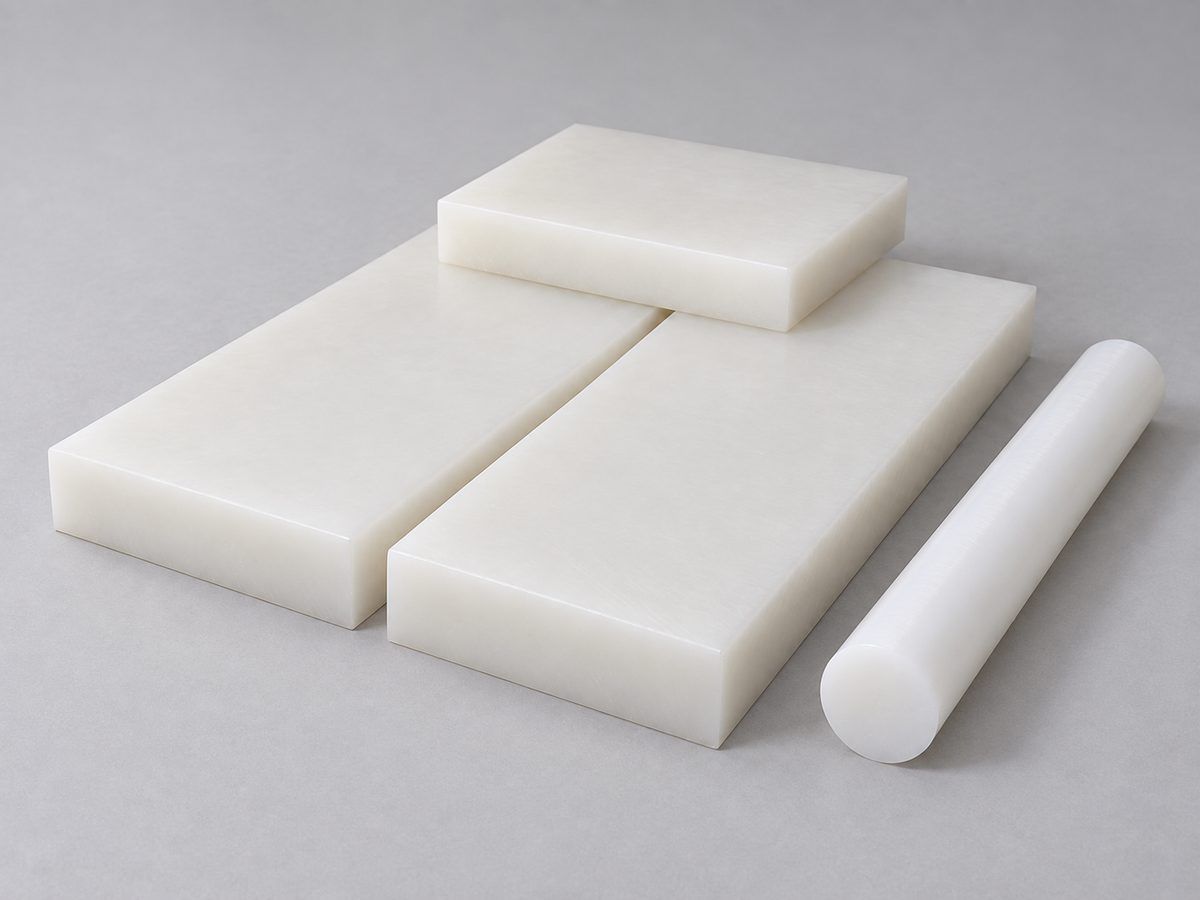
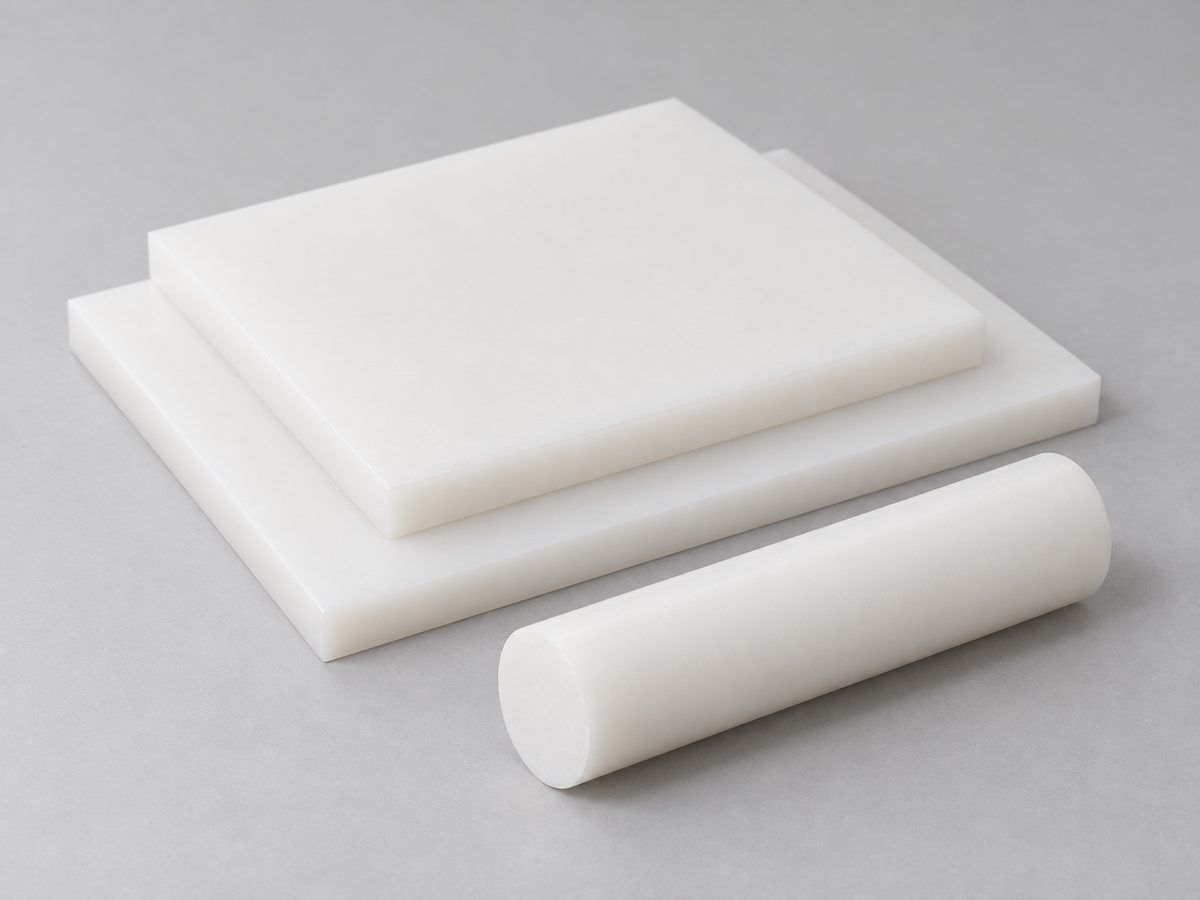
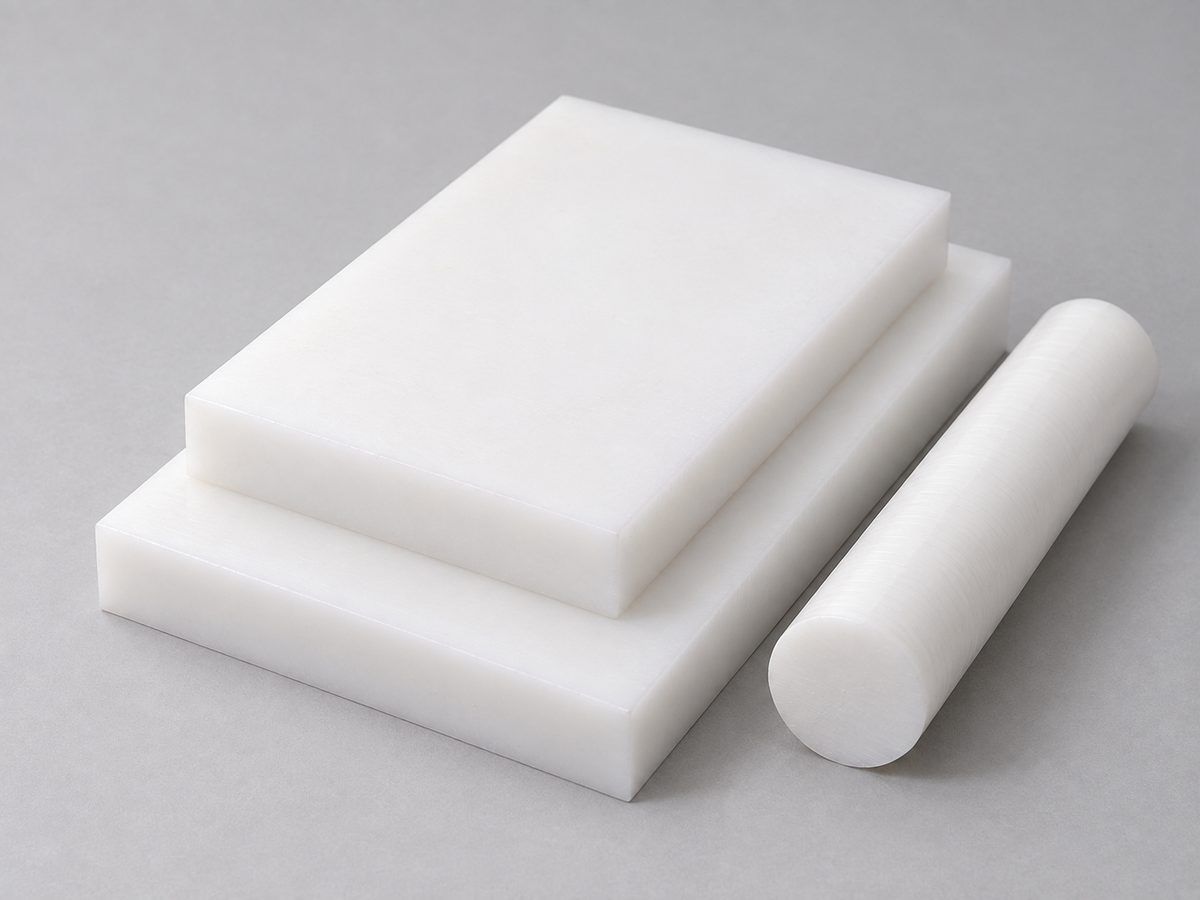
HDPE (high-density polyethylene) is a compression-molded polyethylene product widely used for food contact applications because it is hygienic. Polyethylene is classified by density into HDPE, a rigid high-density polyethylene, and LDPE, a more flexible low-density polyethylene.
- Service temperature range
- −50~+90℃
- Sheet thickness
- 1~100mm
- Rod diameter
- Φ10~300mm
Features
Resists most acids and alkalis
Excellent resistance to most acids and alkalis.
Excellent electrical insulation
Superior electrical insulation properties.
Easy to weld
Can be joined easily by welding.
Certified for food contact
Certified for food contact applications in compliance with food hygiene standards.
Usable from −50 to +90℃
Usable across this range, with excellent low-temperature performance.
Difficult to bond or print
Completely non-polar, so it is difficult to bond with adhesives or print on.
Properties
| Property | Unit | Test method | HDPE | PP |
|---|---|---|---|---|
| Mechanical properties | ||||
| Tensile yield strength | kg/cm² | ASTM D638 | 250 | 330 |
| Tensile strength at break | kg/cm² | ASTM D638 | Pending | 310 |
| Elongation at break | % | ASTM D638 | 800 | >5100 |
| Flexural modulus | kg/cm² | ASTM D790 | 11000 | 17000 |
| Hardness | Rockwell | ASTM D785 | D65 | R100 |
| Notched impact strength | kg·cm/cm notch | ASTM D256 | 20 | 3.8 |
| Abrasion loss | mg/1000 cycles | ASTM D1044 | Pending | 40 |
| Physical properties | ||||
| Specific gravity | — | — | 0.96 | 0.91 |
| Coefficient of linear thermal expansion | ×10−5/℃ | — | 11 | 11 |
| Thermal conductivity | kcal/m·hr·℃ | — | 0.21 | 0.12 |
| Water absorption (24 h immersion) | % | ASTM D570 | <0.01 | <0.01 |
| Specific heat | kcal/kg·℃ | — | 0.55 | 0.46 |
| Continuous service temperature | ℃ | — | Pending | 65 |
| Flammability | — | ASTM D635 | 2.5~2.6 | 1.9~2.1 |
Values are taken from the PP and HDPE comparison table on the PP page. Rows marked “Pending” are still being verified — ask for them with your quote request if you need them.
Sizes
HDPE sheet
- White
- 1
- 2
- 3
- 4
- 5
- 6
- 8
- 10
- 12
- 15
- 20
- 25
- 30
- 35
- 40
- 45
- 50
- 60
- 70
- 80
- 90
- 100
- Black
- 3
- 5
- 6
- 8
- 10
- 15
- 20
- 25
- 30
- 35
- 40
- 50
- 60
HDPE rod
- White
- 10
- 15
- 20
- 25
- 30
- 35
- 40
- 45
- 50
- 55
- 60
- 65
- 70
- 75
- 80
- 85
- 90
- 95
- 100
- 110
- 120
- 130
- 140
- 150
- 160
- 170
- 180
- 190
- 200
- 210
- 220
- 250
- 300
- Black
- 15
- 20
- 25
- 30
- 35
- 40
- 45
- 50
- 55
- 60
- 65
- 70
- 75
- 80
- 90
- 100
- 110
- 120
- 130
- 140
- 150
- 160
- 170
- 180
- 200
Applications
- Explosives storage facilities
- Hoppers and chutes
- Silo linings
- Bushings
- Gears
- Rollers and guides
Compare with other materials
Side-by-side comparison guides are in preparation. See each material page for sizes and properties.
Frequently asked questions
What temperature range can HDPE be used in?
It can be used from −50℃ to +90℃ and performs well at low temperatures.
What sizes of HDPE sheet and rod are available?
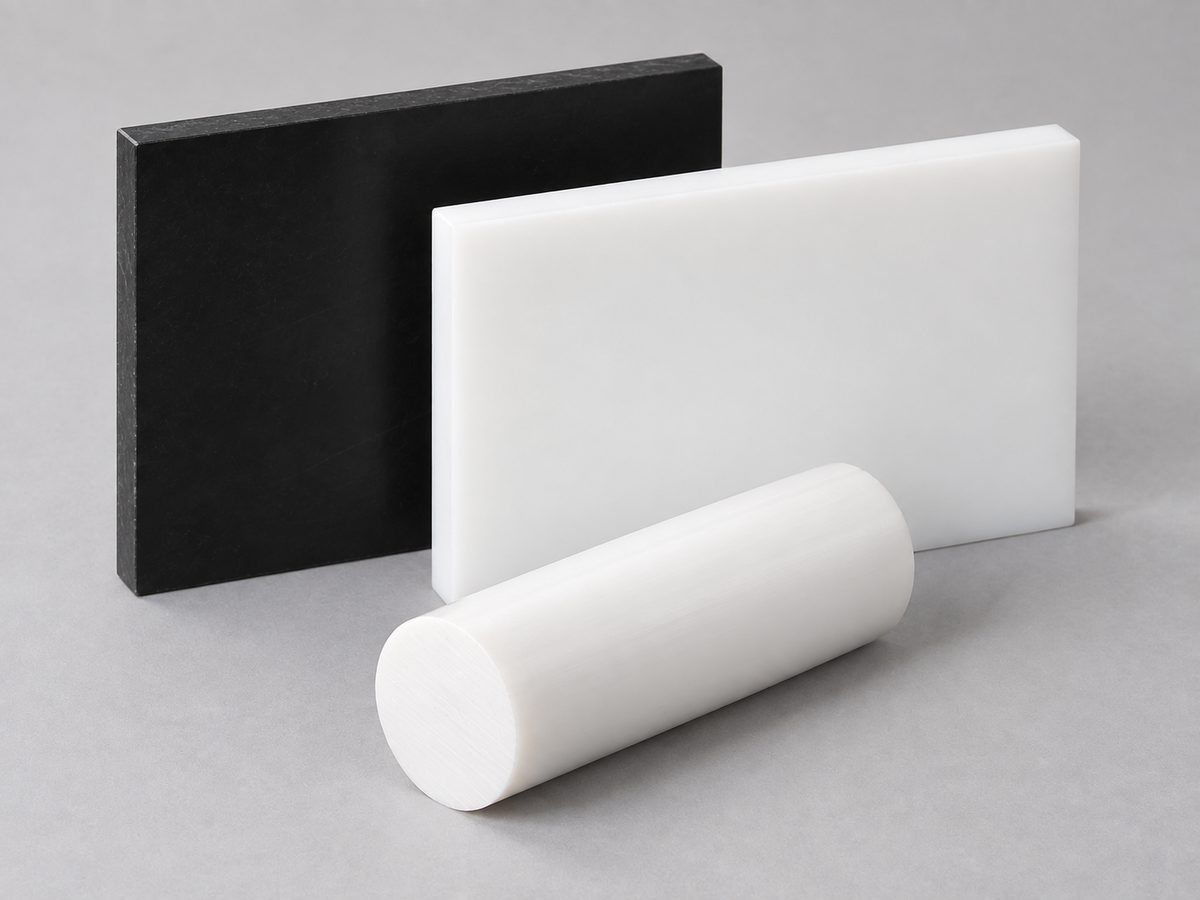
Sheet thicknesses are 1, 2, 3, 4, 5, 6, 8, 10, 12, 15, 20, 25, 30, 35, 40, 45, 50, 60, 70, 80, 90, 100 mm in white and 3, 5, 6, 8, 10, 15, 20, 25, 30, 35, 40, 50, 60 mm in black. Rod diameters are Φ10, 15, 20, 25, 30, 35, 40, 45, 50, 55, 60, 65, 70, 75, 80, 85, 90, 95, 100, 110, 120, 130, 140, 150, 160, 170, 180, 190, 200, 210, 220, 250, 300 mm in white and Φ15, 20, 25, 30, 35, 40, 45, 50, 55, 60, 65, 70, 75, 80, 90, 100, 110, 120, 130, 140, 150, 160, 170, 180, 200 mm in black.
Can HDPE be glued or printed?
HDPE is completely non-polar, so bonding with adhesives or printing on the surface is difficult. It can, however, be joined easily by welding.
Can HDPE be used where it touches food?
Yes. HDPE is certified for food contact in compliance with food hygiene standards and is widely used in food contact applications because it is hygienic.